
How to Choose the Right Audio Visual System for Your Business
A well-designed audio visual (AV) system can make a significant difference in how businesses communicate, collaborate and present information. From meeting rooms and training facilities to reception areas and large corporate spaces, the right combination of audio visual equipment can improve communication and create a more engaging environment. However, with so many AV products and solutions available, choosing the right system can be challenging. The best solution is not necessarily the one with the most advanced features, but one that matches your business requirements, space and intended applications. Here are some key factors to consider when selecting an audio visual system for your business.Assess Your Business’s AV Requirements
Assess Your Business’s AV Requirements
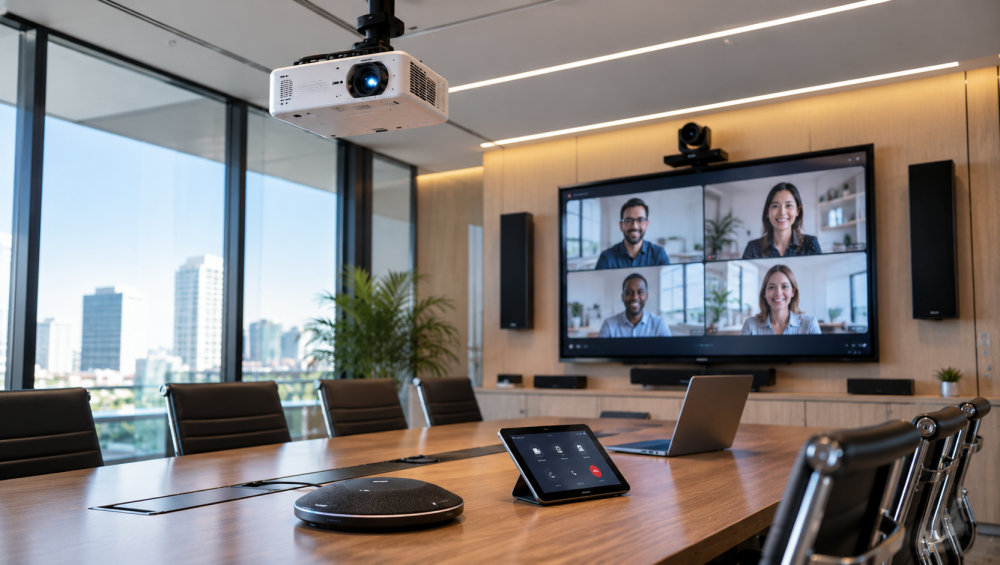
Start by identifying how the audio visual system will be used. Different business environments require different types of AV solutions. For example, a meeting room may require a display, wireless presentation system, microphones, speakers and video conferencing equipment, while a training room may benefit from a projector, interactive display and integrated audio system.
Consider questions such as:
- What will the AV system be used for?
- How many people will use the system at one time?
- Will it be used for presentations, meetings, training or customer engagement?
- Does the system need to support remote participants?
- Will the equipment need to connect to laptops, mobile devices or other systems?
Clearly identifying these requirements can help you avoid investing in equipment that does not suit your actual needs.
Key Components to Consider
Consider the Space and Room Layout
The size, layout and characteristics of a room can influence the type of AV equipment required. A small meeting room may only need a compact display and audio system, while a larger conference room or auditorium may require multiple displays, projectors, microphones and speakers. Viewing distance is another important consideration when selecting a display or projection system. The screen size and display technology should allow everyone in the room to see content clearly. For larger spaces, professional projector installation, video walls or multiple display solutions may be more suitable. The placement of speakers, microphones, screens and other equipment should also be considered during the system design stage to ensure effective coverage and usability.
Think About Integration and Ease of Use
Your business may grow or change over time, so it is worth considering whether your AV system can accommodate future requirements.
For example, you may eventually need additional displays, more conferencing capabilities, larger presentation spaces or integration with other technologies. Choosing scalable AV solutions can make it easier to upgrade or expand the system when required.
It is also important to consider compatibility between new and existing equipment. A professional AV solution provider can help assess your current setup and recommend equipment that works effectively with your existing infrastructure.
Why Professional AV System Design Matters
Selecting individual AV products is only one part of creating an effective audio visual system. The way the equipment is designed, connected and installed can have a significant impact on overall performance.
Professional AV system design takes into consideration factors such as room layout, equipment compatibility, signal distribution, audio coverage, viewing requirements and future expansion. This helps ensure that the selected audio visual equipment works together as a complete system rather than as separate components.
The Importance of Professional Installation and Commissioning
Proper installation is essential to achieving reliable AV performance. Equipment that is incorrectly positioned, connected or configured may not deliver the expected results.
Professional installation can include equipment mounting, cabling, termination, system configuration and testing. For projection systems, proper projector installation can also help achieve suitable image positioning and viewing quality.
Commissioning is another important stage of the process. It involves testing and checking the completed system to ensure the different components are functioning correctly before the system is handed over to the customer.
Choosing the Right Audio Visual Solution Provider
When investing in an AV system, choosing the right solution provider is just as important as choosing the equipment itself.
Look for a provider that can offer more than product supply. A comprehensive AV provider should be able to understand your requirements, recommend suitable equipment, design the system and provide professional installation and technical support.
Avisol provides end-to-end audio visual solutions for a wide range of applications and industries. As an audio visual and multimedia product manufacturer in Malaysia, Avisol offers consultancy, system design, installation, termination and commissioning services to help customers implement suitable AV systems for their requirements.
With a nationwide dealer network providing sales and after-sales support, Avisol serves customers across various sectors, including government agencies, educational institutions, hospitals, corporate offices and retailers.
Conclusion
Choosing the right audio visual system requires more than selecting individual products. Businesses should consider their intended applications, room characteristics, equipment compatibility, ease of use and future requirements when planning an AV system.
By combining suitable audio visual equipment with professional system design, installation and commissioning, businesses can create a reliable and practical AV environment that supports communication, collaboration and presentation needs.
Working with an experienced AV solution provider can also make the process easier, from initial consultation and equipment selection through to implementation and ongoing support.

